


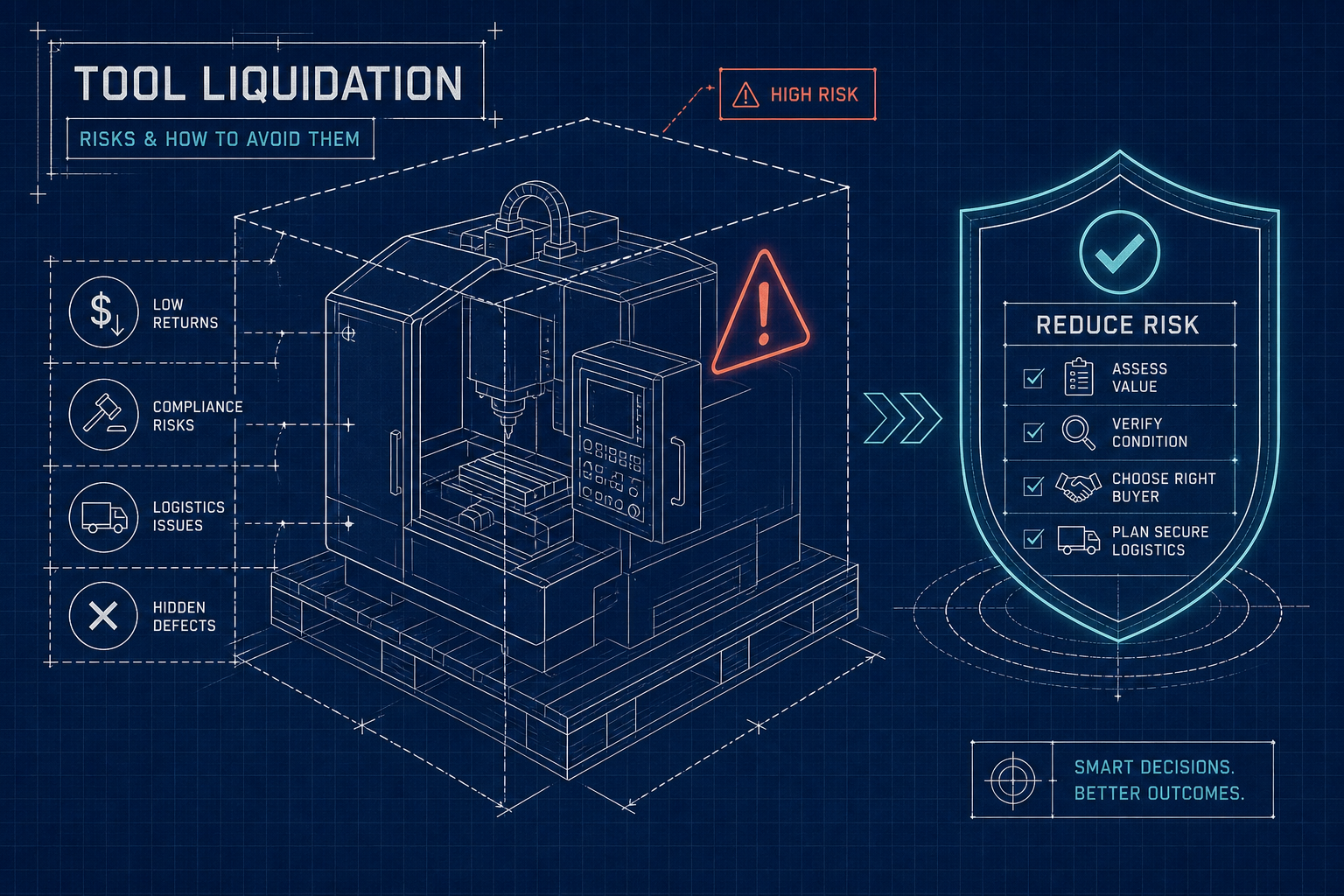
Tool Liquidation: Risks & How to Avoid Them
Tool liquidation is one of the most attractive categories in the wholesale resale market. Power tools, hand tools, and mixed tool pallets sourced from major U.S. retailers can come in at significant discounts below retail, the kind of margin that commands serious attention from resellers and e-commerce sellers alike. A single Grade A DeWalt or Milwaukee pallet priced right can generate returns of 40, 60% or more on platforms like eBay, Amazon, or at a physical discount storefront, depending on condition grade and sourcing cost.
But that same margin potential is exactly what disappears fast when buyers walk in unprepared. The resellers who consistently profit from surplus tool inventory treat risk management as a core sourcing skill. They don’t wing it. They calculate landed costs before bidding, verify sellers before sending payment, and know exactly what a condition grade means before a pallet ships. Buyers who skip those steps often end up with lots they can’t move at a profit.
This article breaks down every major risk in the tool liquidation space and gives you a concrete way to handle each one. No fluff, no vague advice. Just the information you need to buy smarter.
The risks most buyers ignore until it’s too late
Tools are a higher-risk liquidation category than most buyers realize going in. A returned blender may have been used once or twice before the customer sent it back. A returned circular saw or impact driver may have spent months on a jobsite, exposed to dust, debris, and hard daily use. That wear-and-tear gap between tools and other liquidation categories like apparel or home goods is significant. It makes condition assessment far more critical when you’re sourcing wholesale tool lots than when you’re buying general merchandise pallets.
Most buyers who lose money on tool liquidation pallets do so in one of three ways. They buy the wrong condition grade because they didn’t understand what the listing actually meant. They underestimate their total fees and watch their margin shrink after the fact. Or they source from an unverified seller and receive inventory that doesn’t match what was advertised. Each of these is avoidable, and the next three sections address each one directly.
What condition grades actually mean for liquidated tools
Grading terminology in the liquidation industry is not standardized across every platform, which creates real risk for buyers who assume “Grade B” means the same thing everywhere. Understanding what you’re actually buying before a pallet ships is non-negotiable when you’re dealing with tool lots that include high-value SKUs.
Grade A, Grade B, and salvage: a plain-English breakdown
Grade A tools are fully functional with no cosmetic defects. They’ve been inspected and tested to manufacturer specifications. These lots command the highest wholesale prices and resell closest to retail value. Grade B tools are also fully functional, but they show minor cosmetic wear: light scratches, scuffs, or faded logos. These typically resell at 20, 40% below retail, which still leaves solid margin if your landed cost is right. Used-Fair condition means the tool has heavy wear and likely needs repair before it’s sellable. Salvage means parts only or significant repair required, and those lots should be priced accordingly at 60, 80% or more below retail.
For a deeper, reseller-focused breakdown of A versus B grading and what to expect when buying in bulk, see this practical overview on A vs B grade products: what every reseller should know.
How misgraded items kill your resale margin
The real problem isn’t the grading system itself. It’s that some sellers list Grade B lots as Grade A, or quietly mix salvage pieces into “used-good” lots. Buyers who receive those pallets are suddenly holding inventory they can’t price competitively without taking a loss. Without a detailed manifest listing individual SKUs, UPCs, and confirmed condition grades, there’s no way to verify what you’re getting before the pallet ships. Always ask for documentation. If a seller can’t or won’t provide a manifest, that tells you everything you need to know about whether to proceed.
Hidden fees in tool liquidation that quietly drain your margins
The hammer price is not what you pay. New buyers learn this the hard way, usually after their first auction win. Understanding the full fee structure before you bid is the difference between a profitable lot and a break-even headache. The sections below cover where those costs stack up and what to watch for.
Buyer premiums, platform fees, and what they actually add up to
Auction-based platforms charge a buyer’s premium on top of your final bid. On platforms like Liquidation.com, that premium ranges from 5, 10% of the hammer price, and sales tax applies to the premium as well. On a $1,200 tool pallet, a 10% buyer’s premium adds $120 before a single tool ships. Observed market rates suggest premiums at many platforms run 12, 25%, depending on the category and format. If you calculated your margin based only on the bid price, you’ve already lost ground before accounting for shipping or taxes. For a clear primer on how auction costs are typically calculated, consult this guide on how to calculate auction costs.
Shipping costs, late payment penalties, and the fees buried in the fine print
Shipping costs vary significantly based on lot size, weight, and your location relative to the warehouse. Always pull a shipping quote before placing a bid, because estimates can differ from final costs and quotes typically don’t include duties or taxes. Late payment penalties are another trap. On Liquidation.com, the penalty is 15% of the lot price or $200, whichever is greater. Miss a payment window and that fee wipes out a meaningful chunk of your projected profit before the inventory even arrives.
How to tell a legitimate seller from a scam operation
Fraudulent wholesale tool lot sellers have gotten better at looking legitimate. A professional-looking website and a few staged warehouse photos are not proof of a real operation. You need to verify beyond the surface level before you commit any money.
Trust signals that actually hold up under scrutiny
The verification steps that matter most are straightforward. Confirm the seller has a physical warehouse address you can verify on Google Maps, not just a P.O. box. Call the phone number and speak with a real person who can answer specific questions about the inventory. Ask for a manifest with individual SKUs or UPCs, and get their return policy in writing with specific terms. Check independent reviews on Trustpilot, BBB, and reseller forums, not just testimonials on the seller’s own site. Business longevity and documented relationships with named U.S. retailers are strong credibility markers.
When evaluating a tool pallet reseller, also look for sourcing transparency: suppliers who can name the retail origins of their inventory and update stock on a regular schedule give you a measurable edge over those who can’t. Pallet Liquidation: Your Guide To Buying And Profit, for example, describes how published lot origins and weekly updates remove much of the guesswork that plagues less transparent sourcing channels.
When checking sellers, also review fraud prevention resources so you know what specific red flags to watch for; this fraud protection and awareness resource is a concise primer on common scams and protective steps.
Payment methods that protect you and ones that don’t
Pay with a credit card whenever possible. Credit cards give you dispute resolution rights if the inventory doesn’t match what was described. Any seller pushing you toward Zelle, CashApp, or PayPal Friends and Family is pushing you toward a payment method with zero buyer protection. Non-reversible payment requests are one of the clearest red flags in the liquidation space, regardless of how polished the seller’s website looks. If a deal feels rushed or the price seems unrealistically low for the brand and condition grade advertised, trust that instinct.
Calculating your true landed cost before you commit
Profitable resellers don’t guess at margins. They calculate them before bidding, and they walk away from lots where the numbers don’t hold up. This is the discipline that separates consistent earners from buyers who wonder every month why margins are thin.
The landed cost formula every tool liquidation buyer should use
The calculation follows a clear sequence: final bid price + buyer premium + estimated shipping + applicable sales tax = landed cost per pallet. Note that this is a simplified starting framework; depending on your operation, you may also need to account for insurance, storage, handling, and overhead. Once you have your landed cost, divide it by the total unit count from the manifest to get your cost per unit. Then compare that figure against realistic resale prices for the condition grade you’re buying. For a professional overview of what landed cost includes and how carriers treat it, see this explanation from FedEx on landed cost.
A simple example makes this concrete. If a Grade B power tool pallet bids at $900, with a 10% buyer premium ($90), $150 in shipping, and $75 in taxes, your landed cost is $1,215. If the manifest shows 30 units, your cost per unit is $40.50. Additional costs like returns or platform fees will reduce that margin further, so build them in before you bid. For additional tactical guidance on buying and profiting from pallets, consult Pallet Liquidation: Your Guide To Buying And Profiting.
When a deal stops being a deal
If your landed cost per unit for a Grade B lot is $55 and comparable refurbished power tools sell on eBay for $65, the margin is already too thin. Once you factor in platform listing fees, typically 10, 15% on eBay or Amazon, plus returns and storage, you’re likely losing money on every unit. Experienced resellers generally target a minimum 40, 50% gross margin to absorb those downstream costs, though the right threshold varies by product category and business model. If the numbers on a lot don’t reach that threshold after you’ve run the full calculation, pass on it and find the next one.
How buying tool liquidation pallets from the right source solves most of these problems
After working through every major risk in this category, the logical question is: where should you actually buy? The answer comes down to sourcing from a supplier whose structure eliminates the risks described above rather than requiring you to navigate them on every purchase.
What a vetted tool liquidation supplier looks like in practice
A low-risk sourcing partner has direct relationships with major U.S. retailers, provides weekly inventory updates with detailed manifests, maintains transparent pricing with no surprise fees, and backs purchases with a real buyer protection policy. That’s a fundamentally different experience than bidding on auction-based platforms where condition claims may go unverified, fees stack unpredictably, and the origin of the inventory isn’t always clear. It’s worth noting that some platforms, including B-Stock and select vetted sellers on larger marketplaces, do provide manifests and disclose sourcing information, so the quality of any given channel depends on the specific seller. Still, when tool lots trace directly back to named retailers, buyers have a far clearer picture of what they’re actually receiving.
Why Pallets Liquidation USA’s buyer protections change the risk equation
Pallets Liquidation USA is built around the specific protections this article has outlined. According to the company, it offers a 100% money-back guarantee on misrepresented inventory, which directly counters damaged goods risk. Free shipping on orders over $2,500 eliminates a major source of fee unpredictability that erodes margins on auction platforms. Weekly-updated, manifested inventory sourced from top U.S. retailers means buyers know the grade, brand, and origin of every tool lot before the pallet ships. The company also states it provides 24/7 live customer support, something most auction platforms simply don’t offer. The risk factors don’t disappear in liquidation, but sourcing from a supplier with these protections in place means you’re managing them from a position of information rather than guessing. For practical tips that help you turn sourced pallets into consistent sales, read Pallet Liquidation: Tips For Successful Reselling.
The bottom line on buying liquidated tools profitably
The four ways most buyers lose money on tool liquidation are condition grade misrepresentation, hidden fees, scam sellers, and poor landed cost math. None of those risks are unavoidable. They’re manageable once you know what to look for and have a system for evaluating every lot before you commit.
The best resellers in this category treat sourcing discipline as a competitive advantage. They run the numbers, verify sellers, read manifests, and walk away from deals that don’t meet their margin threshold. That discipline compounds over time into a business that consistently finds margin where other buyers see uncertainty.
If you’re ready to source tool lots with strong buyer protections and transparent pricing, browse tool liquidation inventory at Pallets Liquidation USA. Inventory updates weekly, and the manifests are there before you buy.
Leave a Reply
You must be logged in to post a comment.